

Hey, Tech enthusiasts! Your Daily Dose Of Tech This Friday is here @DawentsIT …We Inspire To Deliver!
Your Daily Dose Of Technology News – June 05, 2026.
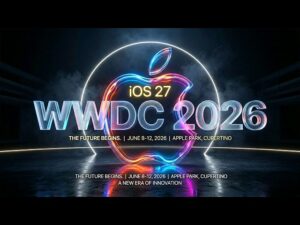
1. Apple: WWDC 2026 Approaches
Apple’s Worldwide Developers Conference begins on June 8, a few days away.
Current expectations include:
– Updates to Apple Intelligence
– Improvements to Siri
– New operating-system releases
– AI developer tools
– A Clearer long-term AI strategy.
Investors and developers are watching closely because Apple has faced criticism for moving more slowly than competitors in generative AI.
WWDC could determine whether Apple can narrow the AI gap with rivals such as Google, OpenAI, Microsoft, and Meta.
In Other News:
2. Foldable iPhone Rumors Continue to Strengthen:
Reports continue to suggest Apple’s first foldable iPhone is on track for a 2026 debut.
Current rumors point toward:
– A September unveiling
– A book-style foldable design
– A nearly crease-free display
– Premium pricing around $2,000
– Positioning above the iPhone Pro Max as Apple’s most expensive smartphone.
A successful foldable iPhone would represent Apple’s first major new iPhone form factor in years and could reshape the premium smartphone market currently led by Samsung foldables.
3. AI Competition Intensifies:
Competition among AI labs remains fierce.
Developments include:
– Microsoft launching new AI models aimed at competing more directly with Anthropic and other frontier labs.
– Anthropic publicly raising concerns about the pace of advanced AI development and calling for stronger safeguards around future systems.

The industry’s focus is increasingly shifting from chatbot features toward:
– Reasoning capabilities
– AI agents
– Coding performance
– Long-context systems
– Enterprise deployment.
4. Data Centers Face Growing Environmental Scrutiny:
The European Union announced work on minimum energy-efficiency standards for data centers.
The move comes as researchers warn that AI-driven demand could dramatically increase:
– Electricity consumption
– Water usage
– Electronic waste production by 2030.
The AI race is increasingly becoming:
– A computing challenge
– An energy challenge
– An infrastructure challenge.
Future AI growth may depend as much on power availability as on algorithmic breakthroughs.
5. Nvidia Expands Beyond GPUs:
Nvidia continues pushing into areas traditionally dominated by Intel and AMD.
Recent Announcements:
– AI-focused CPUs
– AI-agent optimized hardware
– New large-scale reasoning models available through cloud platforms.
One notable release is Nvidia’s Nemotron 3 Ultra reasoning model, which the company positions as an open-weight competitor to leading frontier AI systems.
Nvidia is no longer just a GPU company. It is becoming a full-stack AI platform provider spanning:
* Chips
* Software
* AI models
* Networking
* Cloud infrastructure.
Odds And Ends:
6. AI Infrastructure Spending Reaches New Levels:
The enormous amount of money flowing into AI infrastructure. Amazon is facing internal criticism over its aggressive AI expansion plans. Employees have reportedly questioned the company’s massive data-center investments and their environmental impact while the company continues workforce reductions.
This reflects a broader trend across the industry:
– Microsoft, Google, Meta, Amazon, OpenAI, Anthropic, and Nvidia are all investing tens of billions of dollars into AI computing capacity.
– New data centers, custom AI chips, and power infrastructure have become strategic priorities.

Utilities and regulators are beginning to worry about electricity demand from AI workloads. One notable example is an Arizona utility proposing substantially higher rates for large AI data-center operators.
The competition is no longer just about building better AI models. It’s increasingly about who controls:
– Computing Power
– Energy Supply
– Data-Center Capacity
– Semiconductor Manufacturing.
7. U.S. AI Regulation Takes a Major Step Forward:
A bipartisan discussion draft called the Great American Artificial Intelligence Act was released in Congress.
Proposals reportedly include:
– Federal oversight of frontier AI systems
– Mandatory risk-management programs
– AI workforce impact monitoring
– Cybersecurity requirements
– Expanded AI research funding
– Temporary preemption of certain state-level AI regulations.
This is one of the most comprehensive federal AI proposals seen in the United States so far.
AI regulation in the U.S. has been fragmented among states. A federal framework could significantly influence how companies such as OpenAI, Google, Microsoft, Meta, and Anthropic develop and deploy advanced models.
8. Memory-Chip Demand Remains Extremely Strong:
Chipmaker SK Hynix reported strong investor support for a potential U.S. stock-market listing.
The company’s momentum is being driven largely by demand for high-bandwidth memory (HBM), a critical component used in AI accelerators and AI data centers.
Memory chips have become one of the most important bottlenecks in AI infrastructure, making companies like SK Hynix strategically important to the AI ecosystem.
Summary:
The Technology industry is rapidly transitioning from the AI model race to the AI infrastructure, regulation, and deployment race. Companies are spending unprecedented amounts on compute and energy, governments are beginning to establish regulatory frameworks, and Apple is preparing its response as AI becomes the central battleground of the tech industry.
For Summaries Or Deep-Dives On Any Tech Trends, Contact Us At DawentsIT Or Visit Www.Dawentsit.Com. Subscribe To DawentsIT For More Tech News And Videos. Stay Inspired, And We Deliver! Read more on http://www.dawentsit.com/ #Technology #DawentsIT #TechnologyNews #Tech #Apple #WWDC26 #AI #FoldableiPhone #Samsung #AllThingsTechnologyNews #DailyDoseOfTech #WeInspireToDeliver


