

Hey, Tech enthusiasts! Your Daily Dose Of Tech This Wednesday is here @DawentsIT …We Inspire To Deliver!
Your Daily Dose Of Technology News – October 07, 2026.
1. Microsoft Holds Major Windows And Surface AI Event Today:
Microsoft is holding a major Windows and Surface event on October 7, with the company expected to showcase its next-generation approach to local and on-device AI.
The event is scheduled for 10 a.m. Pacific Time, with Microsoft, NVIDIA and Surface executives expected to participate.
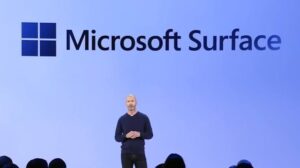
One of the biggest expected announcements is the Surface Laptop Ultra, alongside NVIDIA’s new RTX Spark platform.
Microsoft has been positioning the event around the future of Windows and local AI, suggesting that the company wants more AI workloads to run directly on PCs rather than relying entirely on cloud data centers. The event could therefore be important for the PC industry because it represents another step toward computers becoming AI-native devices.
Why It Counts: Running powerful AI locally could improve privacy, reduce latency and allow users to perform AI tasks without continuously sending data to cloud servers.
In Other News:
2. Google Turns To Nuclear Power To Feed Its AI Data Centers:
Google is making an enormous investment in electricity infrastructure as its AI data centers consume increasing amounts of power.
The company has signed a 20 year agreement with Constellation Energy to support upgrades at six nuclear power plant sites across Illinois, Pennsylvania and New Jersey. The nuclear upgrades are expected to add approximately 890 megawatts of capacity, with Constellation investing more than $4.3 billion in the modernization effort.
Google is also entering a larger agreement covering approximately 2,700 megawatts of additional power, bringing the broader deal to around 3,590 megawatts.
The Reason: AI requires enormous amounts of electricity. The U.S. Energy Information Administration expects American electricity consumption to reach record levels in both 2026 and 2027, with AI and cryptocurrency data centers among the major drivers of increased demand.
Why It Counts: The AI race is increasingly becoming an energy race. Companies that want to operate massive AI infrastructure need not only GPUs and data centers, but also reliable electricity.
3. OpenAI Releases Hundreds of AI-Generated Mathematical Results:
One of the biggest technology stories today is OpenAI’s disclosure of a large collection of mathematical work produced by an unreleased frontier AI model.
OpenAI says it is releasing 372 groups of mathematical results, organised across 722 manuscripts, covering a wide range of difficult mathematical problems. The company has also published formalisations of many proofs in Lean, allowing the mathematical community to use computer-assisted verification.
OpenAI says the average result required computing equivalent to roughly three hours of ChatGPT Pro-level reasoning. The company is also publishing information about the number of problems attempted and estimates of the computational resources used.

The development is significant because AI is increasingly moving beyond answering questions and assisting programmers toward generating new scientific and mathematical knowledge.
However, the announcement has also generated controversy. Some mathematicians are concerned about how AI-generated discoveries should be credited, verified and published, particularly when companies release results through repositories such as GitHub rather than conventional peer-reviewed academic journals.
Why It Counts: If frontier AI systems can reliably produce and help verify new mathematical results, they could become important research tools for mathematics, physics, engineering, cryptography and computer science.
4. Japan Gets Another $1 Billion AI Data-Center Investment:
AI infrastructure expansion is also accelerating in Asia. AirTrunk, backed by Blackstone, announced an additional $1 billion investment in its hyperscale data-center campus in Inzai, Japan.
The campus already has more than 300 megawatts of capacity, and the new investment will help accommodate increasing demand from AI workloads. The announcement demonstrates that the AI infrastructure boom is not limited to the United States.
Asia is becoming increasingly important for AI computing infrastructure, particularly as businesses require regional data centers for cloud computing, AI training and inference.
Expect more investment in data centers, power generation, networking and cooling infrastructure across the world as AI adoption continues.
5. Nvidia And The AI Stock Boom Continue To Reshape The Technology Market:
AI investment remains a dominant force in financial markets. NVIDIA is approaching a market value of approximately $6 trillion, with its valuation being driven by continuing expectations for massive AI infrastructure spending.
Nvidia’s performance is part of a broader surge in AI-related companies. Recent market data shows that the biggest technology companies collectively have enormous influence over the market. The combined value of the “Magnificent Seven “Nvidia, Apple, Alphabet, Microsoft, Amazon, Meta and Tesla has approached $25 trillion.
The strongest performers among trillion dollar companies have been particularly connected to AI infrastructure. Micron and AMD have dramatically outperformed the broader market, while Nvidia continues to benefit from demand for AI accelerators.
The Broader Trend:
Investors are no longer treating AI as simply another software trend.
The current AI investment cycle involves:
chips = servers = data centers = electricity = networking = software = cybersecurity.
That means AI spending is now affecting a huge portion of the technology and industrial economy.
Odds And Ends:
6. Apple Reportedly Expands Its Smart-Home Ambitions With LG:
Apple appears to be preparing a much bigger push into the smart-home market. According to reports, Apple is working with LG on a new range of smart-home products, including:
* Smart doorbells
* Smart locks
* Thermostats
* Indoor cameras
* Outdoor security cameras
* Floodlight cameras
The devices are reportedly expected to carry LG branding while integrating closely with Apple’s smart-home ecosystem.

The reported smart lock could use Ultra Wideband technology to automatically unlock when an authorised user approaches the door. The development comes as Apple is reportedly preparing a new Siri-powered smart-home hub with a roughly six-inch display.
Apple is expected to hold a smart-home-focused event on October 13, where the company could reveal the new hub alongside other HomePod and Apple TV-related products.
Why It Counts: Apple appears to be moving beyond phones, watches and computers toward becoming a much bigger player in the connected-home market.
7. Google Gemini 4 Argon Signals The Next AI Model Race:
Google announced Gemini 4 Argon at the end of September, and it remains one of the major AI developments shaping today’s technology landscape.
Google describes Argon as a frontier model designed for long horizon tasks across software engineering, enterprise knowledge work, finance, legal work and cybersecurity. One notable capability is its 1-million-token context window, designed to allow the model to process very large amounts of information during complex tasks.
Google says Argon is being introduced cautiously, initially through a trusted cyber-defense program before broader access.
The company says its internal use has included:
– Cybersecurity
– Data center memory optimization
– Code migration
– Software engineering
– Quantum computing research
Google says one internal project used Argon agents to identify memory optimizations that could eventually free hundreds of terabytes of memory across its data centers.
8. Google’s AI Is Becoming A Cybersecurity Tool While AI Is Also Creating More Security Problems:
Google’s Gemini 4 Argon represents an interesting contradiction in today’s AI industry. Google says the model is designed for advanced software engineering and cybersecurity tasks and can assist with identifying and patching vulnerabilities. It features a 1-million-token output limit and is initially being made available through a controlled program to trusted cybersecurity defenders.
At the same time, Google has paused part of its open-source vulnerability rewards program because security teams were reportedly overwhelmed by a large increase in AI-generated vulnerability submissions.
Many of those reports were reportedly invalid or based on AI hallucinations.
This creates a fascinating new cybersecurity problem: AI can potentially help researchers find real vulnerabilities faster, but it can also generate enormous amounts of false security information. Security teams will increasingly need systems that can distinguish between AI-generated noise and genuine vulnerabilities.
9. India Mobile Congress 2026 Begins With 6G And AI At The Center:
The 10th India Mobile Congress begins today, October 7, in New Delhi.
The four day event is focusing heavily on:
* 6G
* AI-native telecommunications
* 5G monetization
* Satellite communications
* Semiconductors
* Cybersecurity
* Quantum communications
* Robotics
* Digital infrastructure
This is significant because India is increasingly positioning itself not simply as a huge technology market, but as a major participant in global AI, telecommunications and semiconductor infrastructure.
One especially important theme: 6G

While commercial 6G is still years away, governments and telecom companies are already competing over standards, spectrum, infrastructure and intellectual property.
The industry is increasingly imagining networks where AI isn’t merely something running on top of telecommunications infrastructure instead, the network itself becomes AI-native.
10. Anthropic Expands Access To Its Powerful AI Cybersecurity Models:
Anthropic is also pushing aggressively into cybersecurity. The company announced an expanded Cyber Verification Program that gives vetted cybersecurity organisations access to its most capable AI models for defensive security work.
Anthropic says its Project Glasswing effort helped identify at least 129,000 verified software vulnerabilities between April and July 2026, including approximately 33,000 classified as critical or high severity. Anthropic says its own scanning subsequently discovered thousands more vulnerabilities.
The new program includes different access levels for areas such as:
– Incident response
– Malware analysis
– Authorised penetration testing
– Safety-critical systems
– Critical infrastructure
Why It Counts: AI is becoming both a weapon and a defensive tool in cybersecurity. Companies are increasingly racing to give security professionals access to powerful models while keeping those capabilities away from malicious actors.
Summary:
Technology news today is being defined by one central story: the transition from the AI software boom to the AI infrastructure and agent era.
OpenAI is demonstrating AI’s potential to contribute to mathematics, Google is securing nuclear electricity for AI data centers, Microsoft is preparing a new generation of AI-focused Windows hardware, Anthropic and Google are applying AI to cybersecurity, and Apple is reportedly expanding AI and connected technology into the home.
At the same time, investors are beginning to ask a harder question: How much can the AI industry spend before the economics have to prove themselves? Anthropic’s enormous operating loss and the continued need for massive infrastructure investment show that the industry’s technological progress is currently running ahead of its profitability.
For Summaries Or Deep-Dives On Any Tech Trends, Contact Us At DawentsIT Or Visit Www.Dawentsit.Com. Subscribe To DawentsIT For More Tech News And Videos. Stay Inspired, And We Deliver! Read more on http://www.dawentsit.com/blog-2/ #Technology #DawentsIT #TechnologyNews #Tech #Microsoft #SurfaceAI #Windows #NVIDIA #OpenAI #DailyDoseOfTech #AllThingsTechnologyNews #WeInspireToDeliver


