

Hey, Tech enthusiast! Your Daily Dose of Tech This Wednesday is here @DawentsIT …We Inspire To Deliver!
Your Daily Dose Of Technology News – December 10, 2025.
1. Nvidia builds location-verification tech to curb AI-chip smuggling:
– Nvidia has developed software that can estimate the geographic location of its GPUs by measuring latency between the chip and Nvidia-operated servers. This aims to help prevent illicit export or smuggling of advanced AI chips — especially into embargoed destinations like China.
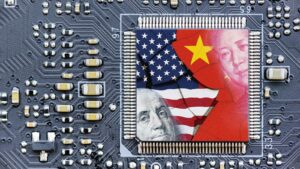
– The feature will debut with Nvidia’s upcoming “Blackwell” chips, and the company is evaluating extending it to earlier generations like Hopper and Ampere.
The move comes amid heightened scrutiny: U.S. lawmakers and the White House have pressed for stricter controls after reports of multi-million-dollar smuggling rings moving Nvidia chips abroad.
In Other News:
2. Beyond GPUs — New semiconductor research emerges:
At the ongoing IEEE International Electron Devices Meeting (IEDM 2025), researchers unveiled the first RF-operation of AlGaN-channel polarization-doped FETs designed for post-silicon technologies. This could mark a step toward new classes of high-frequency, high-power semiconductor devices beyond traditional silicon.
3. Akamai Technologies acquires Fermyon expanding edge computing for AI & cloud workloads:
Akamai has picked up Fermyon, known for serverless WebAssembly (Wasm) and edge-native computing tools. This move supports a growing trend: running AI and cloud-native workloads closer to end users (at the “edge”) rather than in central data centers.

For developers and enterprises, this means lighter, faster, and more efficient AI applications — especially where latency, bandwidth, or compliance matter.
4. Export rules loosen but tension remains:
– The U.S. administration led by Donald J. Trump has approved exports of the high-end Nvidia “H200” AI chips to China.
– Chinese regulators reportedly plan to impose restrictions on buyers, requiring AI firms to justify why they can’t use domestically produced alternatives.
On the same day, China for the first time added domestically-made AI chips (from firms such as Huawei and Cambricon) to its official procurement list signaling a push for self-reliance in AI hardware.
5. Pryzm raises $12.2M to simplify gov-tech procurement:
Pryzm secured $12.2 million in seed funding, led by prominent venture firm Andreessen Horowitz. The startup aims to modernize how governments procure emerging and advanced technologies via a new AI-enabled platform.
This reflects the broader trend: governments increasingly want streamlined, transparent, and AI-aware procurement processes which themselves demand modern software infrastructure.
Odds And Ends:
6. Global data-center build-out intensifies under AI boom:
According to recent industry reporting, data-center investments are surging worldwide with big tech firms projected to pour more than $400 billion into infrastructure in 2026 alone, following $350 billion in 2025.

This expansion is being driven largely by demand for AI and cloud services. But it’s already running into friction: older electrical grids are being stressed, local communities are pushing back over environmental concerns (power, water, noise), and some planned projects have been delayed or cancelled.
Some long-term thinking: as conventional power grid limitations deepen, there’s rising interest in energy alternatives including small modular nuclear reactors to sustain massive AI infrastructure.
7. Security, Cloud, and Corporate Strategy:
Saviynt, a cybersecurity-identity company, snapped up $700 million at a $3 billion valuation underscoring growing investor appetite in identity security as enterprises ramp up cloud, AI, and remote work.
Kyndryl, a major IT services firm, signed a deal with financial-services group MEDVIDA Partners to overhaul technology operations and beef up cybersecurity reflecting persistent demand for infrastructure modernization even outside pure-tech sectors.
Summary:
– Geopolitics + Tech = Rising complexity: With Nvidia’s new location verification tech, China’s procurement nationalism, and U.S. export easing the chip industry is navigating a tangled web of regulation, security, and strategic competition.
– Infrastructure is the new frontier: AI isn’t just about algorithms, it’s about data centers, power, identity security, and edge computing. Firms that enable these infrastructures (cloud, edge, identity) are gaining ground.
– AI is maturing but so are the risks: As enterprises and governments adopt AI, attention is shifting from hype to implementation, scalability, compliance, and long-term sustainability.
– Watch the edge and semiconductors: Emerging semiconductors (like GaN FETs) and edge-native architectures could reshape how and where computing happens possibly decoupling performance from centralized cloud infrastructure.
If you need a summary on any specific topic or more detailed information on emerging tech trends, feel free to ask us @DawentsIT or visit our website at www.dawentsit.com
Follow us for updated news, articles, and videos. Read more on http://www.dawentsit.com/ #Technology #DawentsIT #TechnologyNews #Tech #Nvidia #AI #Chip #GPUs #Semiconductor #IEEE #AllThingsTechnologyNews #AllThingsTechnologyNewsToday #WeInspireToDeliver


