

Hey, Tech enthusiasts! Your Daily Dose Of Tech This Monday is here @DawentsIT …We Inspire To Deliver!
Your Daily Dose Of Technology News – October 05, 2026.
1. Huawei And Qualcomm Reach A Major Multi-Year Patent Agreement:
In another major Qualcomm story today, Huawei has agreed to a broad, multi-year patent licensing agreement with Qualcomm.

The agreement covers technologies including:
* Artificial intelligence
* 5G
* Computing
* Networking
Reuters describes it as a significant cross-licensing arrangement between the Chinese telecommunications giant and the U.S. chipmaker.
The deal is especially notable because Huawei and Qualcomm operate in an industry heavily affected by U.S.-China technology restrictions.
Why It Counts:
The agreement shows that geopolitical competition doesn’t necessarily eliminate commercial cooperation.
Even as the U.S. and China compete over:
* Advanced semiconductors
* AI
* 5G
* Data centers
* Computing infrastructure
companies still need access to intellectual property. Patent licensing therefore remains an important part of the global technology ecosystem.
In Other News:
2. U.S. AI Policy Is Moving Toward Voluntary Industry Oversight:
The U.S. government’s current AI strategy is also receiving attention. The Trump administration has been pushing voluntary AI safeguards rather than comprehensive new regulation.
A recent agreement involving companies including Nvidia, SpaceX, OpenAI, Anthropic, Meta and Google calls for measures such as internal controls and independent safety assessments. However, the agreement does not contain strong enforcement mechanisms or penalties for non-compliance.
That has produced criticism from AI safety advocates who argue that companies shouldn’t be allowed to effectively regulate themselves.
The argument is becoming particularly important because AI companies increasingly control infrastructure that could affect:
* Communications
* Cybersecurity
* Financial systems
* Government services
* Software development
* Scientific research
3. Amazon Warns Data Center Opposition Could Hurt U.S. AI Leadership:
Amazon is escalating its response to growing resistance against data center construction in the United States.
AWS CEO Matt Garman has warned that approximately $68 billion worth of data center projects were blocked during the second quarter of 2026, while more than 100 data-center moratoriums are reportedly being considered around the country. Amazon argues that slowing construction could weaken America’s position in the global AI competition.
Amazon is attempting to address some of the backlash through its Built Together initiative.
The company says it will invest more than $1 billion over five years in communities hosting its data centers. Funding is intended for areas including:
* Education
* Job training
* Energy affordability
* Water conservation
* Energy efficiency projects
* Local infrastructure
Amazon also says it will stop requiring NDAs with government agencies involved in its data center projects.

Amazon has proposed energy-efficiency improvements for schools, community buildings and tens of thousands of homes, while also expanding water-replenishment projects.
The Competitive Landscape:
The issue illustrates a growing contradiction in the AI industry:
– AI companies need enormous physical infrastructure, but communities have to live with the consequences.
Residents are increasingly concerned about:
* Electricity prices
* Water consumption
* Noise
* Pollution
* Land use
* Grid capacity
* Local infrastructure
Amazon argues that data centers create jobs, taxes and economic growth. Critics counter that those benefits don’t necessarily compensate communities for increased resource consumption.
This debate is likely to become much more important as AI computing requirements continue growing.
4. Massive Denmark Data Breach Exposes 8.8 Million Records:
One of the biggest cybersecurity stories today is unfolding in Denmark. Hackers gained unauthorised access to information belonging to approximately 8.8 million people in the country’s Central Person Register.
The compromised information reportedly includes:
* Names
* Addresses
* CPR Numbers (Denmark’s equivalent of Social Security numbers)
The country’s population is only around six million, but the national database contains information on approximately 11 million people, including people who have died or emigrated.
The attackers reportedly abused a legitimate company’s authorised access to the government system rather than simply breaking directly into the central database.
Why this is particularly concerning: It demonstrates one of the most difficult cybersecurity problems facing governments and corporations:
You don’t necessarily have to hack the main system if you can compromise an organisation that already has permission to access it.
This is essentially a supply-chain/access-control problem.
It reinforces the importance of:
– Least-privilege access
– Continuous monitoring
– Strong authentication
– Vendor security
– Anomaly detection
– Rapid revocation of compromised credentials
5. Cybersecurity Threats Are Increasingly Being Accelerated By AI:
The cybersecurity landscape is also changing because AI is being used on both sides of the attack/defense equation.
Security researchers are reporting increasingly sophisticated exploitation activity, including attacks against recently patched vulnerabilities and the use of AI to accelerate vulnerability discovery. SecurityWeek’s October 5 roundup highlights active exploitation of a Citrix NetScaler zero-day and other vulnerabilities.
AI is reducing the amount of expertise and time required to perform some cyberattacks.
At the same time, defenders are using AI for:
– Threat detection
– Vulnerability analysis
– Code review
– Incident response
– Malware analysis
– Automated patching
This is creating an escalating AI-versus-AI cybersecurity environment.
Odds And Ends:
6. Bank Of Japan Warns The AI Boom Could Create Financial Risks:
AI isn’t only changing technology companies, it’s beginning to affect monetary policy and financial markets. Bank of Japan Deputy Governor Shinichi Uchida said the global AI boom has helped ease financial conditions by increasing demand and asset prices.
However, he also warned of a potential correction if the profits expected from massive AI investment fail to materialise.

This is significant because AI companies are spending enormous amounts of money on:
* GPUs
* Data centers
* Networking
* Electricity
* Cloud infrastructure
* Semiconductor manufacturing
Much of that expansion is being financed through both equity and debt.
If AI productivity and revenue grow as expected, the investment could generate enormous economic value. But if spending grows substantially faster than actual AI revenue and productivity, markets could eventually question whether the infrastructure boom is sustainable. AI is becoming both a technology story and a macroeconomic story.
7. Apple And AI Agents: Control Over Computer Access Becomes A Major Issue:
Another important development in the background of today’s AI ecosystem is the increasing conflict between AI agents and operating system security.
Apple has been tightening macOS permissions around Full Disk Access, partly because AI agents introduce new risks when software is allowed to operate a computer on a user’s behalf. Ars Technica reports that Apple is changing permissions in response to concerns surrounding autonomous AI software.
This represents a major conceptual shift.
Historically, security systems were designed around:
– Human = Application = Operating system
AI agents introduce:
– Human = AI agent = Multiple applications = Operating system = Internet
The AI agent may be authorised to perform actions the user would normally perform manually. That makes permission management much more complicated.
8. Apple iPhone 18 Pro Continues To Get Attention:
Apple’s current iPhone generation remains part of today’s consumer tech conversation. The Guardian’s October 5 technology coverage highlights its iPhone 18 Pro review, pointing to improvements including longer battery life, a better display, upgraded Siri capabilities and a variable aperture camera while retaining a design broadly derived from the previous generation. The interesting part isn’t necessarily one individual specification.
Apple’s direction increasingly appears to be about combining:
– hardware + AI + cameras + battery efficiency + on-device intelligence.
The smartphone market is gradually shifting from simply competing on processor speed and camera megapixels toward competing on what the phone can do automatically for the user.
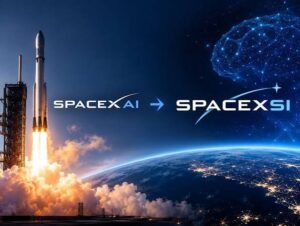
9. SpaceXAI Becomes SpaceXSI:
Elon Musk announced that SpaceX’s AI division SpaceXAI will be renamed SpaceXSI, with the new name referring to “super intelligence.”
The change follows a broader push by the Trump administration to emphasise the term “super intelligence” rather than “artificial intelligence.” The naming change may seem cosmetic, but it reflects a broader shift in the AI industry’s language.
Companies increasingly want to distinguish today’s AI assistants from future systems capable of:
– Long-term planning
– Autonomous action
– Scientific research
– Coding
– Operating infrastructure
– Managing other AI systems
The term superintelligence is increasingly entering mainstream technology and political discussions.
10. Google Gemini 4 Argon Signals The Next AI Model Race:
Google announced Gemini 4 Argon at the end of September, and it remains one of the major AI developments shaping today’s technology landscape.
Google describes Argon as a frontier model designed for long horizon tasks across software engineering, enterprise knowledge work, finance, legal work and cybersecurity.
One notable capability is its 1-million-token context window, designed to allow the model to process very large amounts of information during complex tasks.
Google says Argon is being introduced cautiously, initially through a trusted cyber-defense program before broader access.
The company says its internal use has included:
– Cybersecurity
– Data center memory optimization
– Code migration
– Software engineering
– Quantum computing research
Google says one internal project used Argon agents to identify memory optimizations that could eventually free hundreds of terabytes of memory across its data centers.
Summary:
Technology news today isn’t about a single new gadget or AI model but it’s the transition from the “AI model race” to the “AI infrastructure and agent race.”
The industry is now confronting three major constraints simultaneously: Power, Trust and Autonomy. Companies can build increasingly capable AI models, but they need enough electricity and computing infrastructure to run them; they need governments and consumers to trust them; and they need reliable mechanisms for controlling autonomous agents.
At the same time, the semiconductor industry is becoming increasingly strategic, cybersecurity threats are becoming more sophisticated, and governments are struggling to decide how much oversight is appropriate.
That makes 2026’s second half look less like the beginning of the AI revolution and more like the point where AI starts colliding with the real-world infrastructure, economic and regulatory systems around it.
For Summaries Or Deep-Dives On Any Tech Trends, Contact Us At DawentsIT Or Visit Www.Dawentsit.Com. Subscribe To DawentsIT For More Tech News And Videos. Stay Inspired, And We Deliver! Read more on http://www.dawentsit.com/blog-2/ #Technology #DawentsIT #TechnologyNews #Tech #Huawei #Qualcomm #US #SpaceX #OpenAI #DailyDoseOfTech #AllThingsTechnologyNews #WeInspireToDeliver


