

Hey, Tech enthusiasts! Your Daily Dose Of Tech This Monday is here @DawentsIT …We Inspire To Deliver!
Your Daily Dose Of Technology News – October 12, 2026.
1. Google Launches Fitbit Edge With AI Fitness Tracking And A Replaceable Battery:
Google has introduced the Fitbit Edge, a new fitness tracker combining a physical display, AI-powered activity recognition, and health tracking features.

Price: $179.99
The device is aimed at people who want more advanced fitness features than a basic band without paying for a full smartwatch.
Main Features:
– A 1.34-inch display for viewing workout information and notifications.
– Up to one week of battery life on a single charge.
– A replaceable battery, making the device easier to maintain than many sealed wearables.
– Built-in GPS and ECG-related functionality.
– AI-assisted recognition of more than 100 workout types.
– Compatibility with Android phones and iPhones through Google’s health app.
Google is also promoting deeper health trend analysis through its subscription services. Some advanced features depend on a subscription, and health trend estimates should not be mistaken for a medical diagnosis.
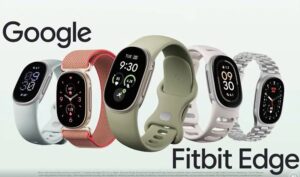
Preorders are open, with general availability scheduled for October 27, 2026.
Why It Counts: Fitbit is moving toward more personalised health coaching rather than simply counting steps and recording workouts. The replaceable battery is also noteworthy as consumer electronics manufacturers face growing pressure to make devices easier to repair and maintain.
In Other News:
2. Microsoft President Calls For Tougher AI Safety Regulations:
Microsoft President Brad Smith has called for stronger rules governing artificial intelligence, warning that AI systems face inadequate safety oversight compared with many everyday products. AI safety is becoming a major policy issue.
Smith has argued for a regulatory framework that includes independent evaluation of advanced AI systems and clearer responsibility when those systems cause harm. He has also advocated emergency mechanisms for stopping AI systems that behave dangerously.
The debate comes as AI agents gain the ability to interact with online services, execute multistep tasks, and make decisions with less direct human supervision.
Key issues under discussion:
– Accountability: Who should be responsible when an AI system makes a harmful decision?
– Independent testing: Should advanced models undergo safety evaluations before deployment?
– Human control: How can developers ensure AI systems can be stopped when something goes wrong?
– Legal protections: Should people harmed by AI systems have clearer routes to compensation?
Businesses adopting AI may face more demanding safety, testing, documentation, and compliance requirements. For consumers, stronger oversight could improve transparency and help reduce risks associated with unreliable or unpredictable AI systems.
The important distinction is that these are calls for stronger regulation, not evidence that every proposed safeguard has already become law.
3. Microsoft Unveils Maia 300 AI Chip To Challenge Nvidia’s Dominance:
Microsoft has announced Maia 300, its third-generation in-house AI chip, with plans for a major deployment across its infrastructure in 2027.
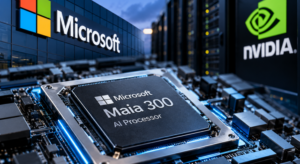
Microsoft says the chip is designed to power AI services that handle tasks such as software development, complex business workflows, and AI inference. The company is pursuing an alternative to relying primarily on external chip suppliers, particularly Nvidia.
What Makes Maia 300 Important?:
– Advanced chip design: The processor uses a chiplet architecture, combining components manufactured using different semiconductor processes.
– Improved efficiency: Microsoft claims Maia 300 can deliver approximately 40% more useful computing per megawatt than leading GPU-based systems.
– Large-scale deployment: Microsoft plans to begin multi-gigawatt deployments in 2027 and potentially deploy more than one million chips during that year.
– Lower operating costs: Custom hardware could help Microsoft reduce the cost of delivering AI services through its Azure cloud platform.
The company is also making substantial investments in AI infrastructure, reflecting the growing expense of operating advanced AI models.
Why It Counts: AI competition is increasingly about more than which company develops the most capable model. Companies must also secure enough computing power and deliver AI services at a sustainable cost. Microsoft’s progress could put pressure on existing chip suppliers while giving cloud customers more options over time.
4. GitLab Warns Of A Critical Code-Execution Vulnerability:
Developers and system administrators should pay attention. GitLab has warned about a maximum-severity vulnerability involving its regular expression compiler that could allow remote attackers to execute arbitrary code on affected instances.
GitLab is widely used to host source code, manage software projects, automate testing, and deploy applications. A serious vulnerability in such a platform can potentially expose sensitive development environments and systems connected to them.
The risk depends on the affected versions, configuration, and attack requirements. The headline alone does not mean every GitLab installation is vulnerable or has been compromised.
Recommended actions for organisations:
– Check GitLab’s official security advisory for affected versions.
– Apply the vendor’s security updates as soon as possible.
– Review access logs and other security telemetry for unusual activity.
– Restrict access to self-managed GitLab instances, especially from the public internet.
– Confirm that backup and incident-response procedures are ready.
Development platforms often have access to source code, deployment credentials, and infrastructure automation. A compromised instance could become a stepping stone into a company’s wider environment.
Administrators should consult the official GitLab advisory to determine whether immediate patching is required for their specific installation.
5. Ledger Investigates Reports Of Stolen Cryptocurrency Linked To A Reseller:
Hardware wallet security comes under scrutiny. Cryptocurrency security company Ledger is investigating reports of stolen funds associated with devices purchased through the CryptoBilis reseller in Southeast Asia.
The investigation has taken a concerning turn after Ledger reportedly identified an unauthorised hardware implant in one affected device. Ledger temporarily paused sales through the reseller while investigating the reports.
A blockchain investigator cited in reporting estimated the losses at more than $86 million, although that figure has not been independently established as the final confirmed loss from the incident. Hardware wallets are designed to protect the private keys used to access cryptocurrency. However, a device’s security also depends on its authenticity, supply chain, initial setup, and the safe handling of recovery phrases.
Users should:
– Purchase wallets directly from manufacturers or trusted, authorised sellers.
– Never share their recovery phrase with anyone.
– Avoid entering a recovery phrase into a website or sending it to customer support.
– Follow the manufacturer’s security guidance if they purchased a potentially affected device.
– Consider transferring assets to a newly secured wallet if the manufacturer specifically recommends doing so.
The bigger lesson: Even a security-focused product can be exposed to risks outside its intended design. Supply-chain integrity is an important part of cryptocurrency security.
Odds And Ends:
6. Apple Prepares To Enter The Smart-Home Display Market:
Apple is preparing a dedicated product announcement focused on its smart-home ecosystem, according to reports published ahead of the event.
Expected announcement: October 13, 2026.
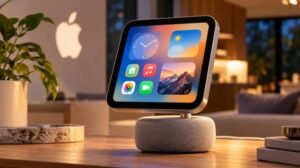
The company is expected to introduce a new smart-home hub, reportedly called HomeView, alongside updated Apple TV and HomePod mini products.
The rumored hub is designed to serve as a central control point for a household’s connected devices. It could combine a touchscreen interface with Siri voice commands, video calls, media playback, calendars, and smart-home controls.
What Apple is reportedly planning:
– HomeView: A dedicated display for controlling smart-home devices and accessing Apple’s services.
– Updated HomePod mini: A refreshed version of Apple’s compact smart speaker.
– New Apple TV 4K: An updated streaming and home-entertainment device.
– More AI-powered Siri features: A more conversational assistant that could make controlling connected devices easier.
Reports suggest the Apple TV 4K and HomePod mini could reach customers on October 30, while HomeView may arrive later. These dates and product details remain subject to confirmation.
Apple has an opportunity to compete more directly with Google’s and Amazon’s smart-home platforms. Its success will depend on whether Siri can reliably understand requests, whether devices from different manufacturers work together smoothly, and whether the experience offers meaningful privacy advantages.
For Apple users, the biggest potential benefit is a more unified experience across iPhones, Apple TVs, HomePods, and compatible smart-home accessories.
7. TSMC’s AI Chip Boom Drives Expectations Of Another Record Quarter:
Taiwan Semiconductor Manufacturing Company (TSMC) is expected to report a sixth consecutive quarter of record profits, supported by demand for advanced chips and chip-packaging technology.
TSMC manufactures advanced processors for major technology companies, including Nvidia and Apple. Its production capabilities are central to the development of AI accelerators, smartphones, and high-performance computing systems.
Analysts surveyed by LSEG expected third-quarter net profit of approximately NT$746.3 billion, or US$23.4 billion, representing a 65% year-over-year increase. These are analyst expectations ahead of the company’s scheduled results, not a confirmed final earnings figure.
AI demand remains strong. Data center operators need increasingly powerful chips to train and run AI models. Advanced packaging is increasingly important. Producing the processor alone is not enough; manufacturers must also connect chips and memory efficiently.
Manufacturing capacity is strategic. Technology companies are competing for access to limited supplies of advanced semiconductors.
Supply chain concentration remains a concern. Heavy dependence on a small number of leading manufacturers creates risks if production is disrupted.
Why It Counts: TSMC’s results can provide an important signal about the health of the broader AI industry. Strong earnings would support the view that spending on AI infrastructure is translating into sustained demand for real computing hardware.
8. Amazon’s AI Shopping Tool Raises Questions About Customer Privacy:
Amazon’s AI-powered shopping experience is drawing attention over concerns that automated customer profiles may make inaccurate assumptions about people’s preferences and behavior.
The reported feature uses signals such as shopping history, product reviews, and searches to build a picture of what customers might want.
Personalisation can make online shopping more convenient. An assistant that understands a customer’s needs could suggest relevant products, compare options, and help narrow down a large catalog. However, those benefits depend on the accuracy of the information being used.
The main concerns:
– Incorrect assumptions: Past purchases may not reflect a person’s current needs.
– Privacy: Customers may not understand how their shopping activity informs automated profiles.
– Transparency: Users need ways to understand why a recommendation was made.
– Control: Customers should have meaningful options to correct or manage inaccurate personalisation.
Why It Counts: AI is moving from answering questions to influencing purchasing decisions. As shopping assistants become more sophisticated, retailers will need to balance convenience with privacy, transparency, and customer trust.
For consumers, the important question is whether AI recommendations are genuinely helpful or whether they create a misleading picture of personal preferences.
9. Major Retailer Ahold Delhaize Takes Systems Offline Following Cybersecurity Incident:
A multinational retail IT disruption: Ahold Delhaize has confirmed a security issue within its network and says it has taken some systems offline as a precaution while investigating and mitigating the incident.
The company operates thousands of supermarkets and retail businesses across several countries, including the United States and Europe.
Reports indicate that the disruption has affected some digital services and internal employee systems. The company stated that its stores remained open and continued serving customers at the time of its announcement. The full scope of the incident and its underlying cause had not been established in the company’s initial statement.

What this incident highlights:
– Retailers rely on interconnected systems for inventory, employee scheduling, online orders, customer service, and payments.
– Taking systems offline can help limit damage while security teams investigate suspicious activity.
– Cybersecurity incidents can affect customers even when physical stores remain open.
– Companies need tested backup systems, incident-response plans, and clear communications.
What businesses should learn: Cybersecurity is an operational requirement, not just an IT expense. Organisations should regularly test backups, restrict administrative access, monitor networks, and prepare procedures for operating during an outage.
At present, the retailer’s public statement does not establish that ransomware was responsible. It is important not to label the incident a confirmed ransomware attack without additional evidence.
10. Governments Increase Scrutiny Of Social Media And AI’s Impact On Employment:
Two policy issues are attracting attention: children’s access to social media and the effect of AI on entry-level employment.
The Philippines advances a social media restriction bill: The Philippine lower house approved a bill on October 12 that would restrict minors’ access to social media. The measure reflects wider international efforts to address online safety concerns affecting young users.
Such proposals commonly raise questions about age verification, privacy, parental involvement and the responsibilities of platforms. The challenge is to reduce risks such as harmful content, exploitation and cyberbullying without collecting excessive personal information or unnecessarily restricting access to beneficial online communities.
House approval should not be confused with a law necessarily being fully enacted and implemented; the remaining legislative process and final requirements matter.
AI’s effect on graduates becomes a policy concern: Singapore President Tharman Shanmugaratnam has also highlighted concerns that AI could weaken demand for fresh graduates entering the workforce.
AI systems can already assist with tasks such as drafting documents, summarising information, coding and customer support. These are activities that have historically helped new employees gain experience in professional roles.
The concern is not simply that AI will eliminate every entry-level job. Rather, employers may need fewer people for certain routine tasks, while the remaining positions may require more technical judgment and practical experience.
Businesses, educational institutions and governments will need to consider how graduates can develop skills that complement AI, including problem-solving, communication, domain expertise and the ability to verify automated output.
Why It Counts: Technology policy increasingly involves not just what systems can do, but how their benefits and costs are distributed across society.
Summary:
Technology news today highlights a technology industry undergoing two major transitions: AI is becoming core infrastructure, and the systems built around it are creating new challenges involving security, privacy, reliability, and regulation.
For Summaries Or Deep-Dives On Any Tech Trends, Contact Us At DawentsIT Or Visit Www.Dawentsit.Com. Subscribe To DawentsIT For More Tech News And Videos. Stay Inspired, And We Deliver! Read more on http://www.dawentsit.com/blog-2/ #Technology #DawentsIT #TechnologyNews #Tech #Google #FitbitEdge #AI #Microsoft #Maia300AIChip #DailyDoseOfTech #AllThingsTechnologyNews #WeInspireToDeliver


