

Hey, Tech enthusiasts! Your Daily Dose Of Tech This Thursday is here @DawentsIT …We Inspire To Deliver!
Your Daily Dose Of Technology News – September 24, 2026.
1. Meta Unveils $1,299 VR Glasses:
Meta also introduced a new pair of VR glasses priced at $1,299, with a separate battery puck and a planned spring 2027 launch.
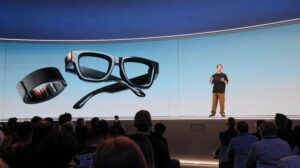
Reuters reports that Meta is simultaneously expanding its AI glasses strategy while continuing to develop VR hardware.
The interesting part isn’t simply the new VR hardware. Meta’s strategy increasingly appears to involve multiple wearable computing categories:
AI glasses = AI assistant = VR = eventually broader ambient computing.
That could allow Meta to reduce its dependence on smartphones and traditional mobile operating systems.
In Other News:
2. Google Photos Adds An AI Virtual Closet:
Google is also expanding AI into everyday consumer applications. Google Photos has introduced an AI-powered virtual closet that can analyse clothing appearing in a user’s photos and organise it into a digital wardrobe.
The feature is now available on Android and iOS. The concept illustrates how AI is increasingly being used not just for generating text and images, but for understanding people’s personal data and turning it into useful interfaces.
Potential applications include:
– Finding clothing items
– Organising wardrobes
– Planning outfits
– Searching old photographs
– Identifying specific garments
It also highlights an important privacy consideration: the more useful AI becomes at understanding personal photographs, the more important data handling and user control become.
3. Google Gemini Can Now Make Phone Calls For You:
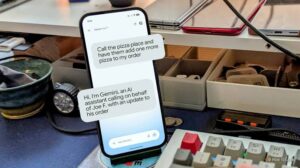
One of today’s most interesting AI developments comes from Google. Google is testing a new Gemini feature called “Call for Me.”
Instead of asking an AI how to perform a task, users can ask Gemini to actually call a business and perform the task for them.
Initially, the feature is being tested with Pixel 11 owners in the U.S. who subscribe to Gemini, using the beta version of Google’s Phone app.
For example, Gemini can potentially:
– Call a store to determine whether an item is in stock
– Ask about product availability
– Make a restaurant reservation
– Reschedule an appointment
– Navigate automated telephone menus
– Wait on hold
– Speak with a human representative
– Provide information that the user has explicitly authorised
The user can watch the conversation through a live transcript and take control of the call at any time. Google says the feature uses the user’s own phone number.
This represents an important transition from generative AI to agentic AI.
Traditional AI:
– You = AI = information
– Agentic AI:
You = AI = action in the real world
Google is therefore moving Gemini closer to functioning as a personal digital assistant that can execute mundane tasks rather than simply answer questions.
4. Databricks Continues Expanding Through Acquisitions:
Databricks has acquired cloud spreadsheet startup Row Zero, according to TechCrunch. The acquisition is part of Databricks’ broader acquisition activity in 2026.
The strategic significance is that spreadsheets remain one of the most important interfaces for business data. Combining spreadsheet workflows with Databricks’ data and AI infrastructure could potentially bring sophisticated analytics and AI capabilities closer to everyday business users.
5. AI PCs Continue Moving Toward Local Processing:
Qualcomm’s announcements also reinforce another major 2026 trend: AI is increasingly moving from the cloud onto the device itself.
Qualcomm highlighted Snapdragon-powered PCs capable of running AI locally, including Microsoft’s new Snapdragon X2-powered Surface devices.
The company says its new Surface Pro 12-inch and Surface Laptop 13-inch models provide substantially faster local AI inference than their predecessors, while maintaining long battery life.
This is part of a broader industry shift.
Instead of:
– Laptop = Internet = AI data center = response
the goal is increasingly:
– Laptop = local NPU = immediate AI response
Cloud computing will still be important, particularly for extremely large models, but local AI can offer advantages in:
* Latency
* Privacy
* Offline operation
* Energy efficiency
* Cost
* Personalisation
Odds And Ends:
6. Major Cybersecurity Warning: TeamCity Vulnerability Actively Exploited:
The U.S. Cybersecurity and Infrastructure Security Agency has warned that ransomware groups are exploiting a critical vulnerability in JetBrains TeamCity.
The vulnerability, tracked as CVE-2026-63077, is an authentication-bypass flaw that can allow unauthenticated attackers to execute operating-system commands on vulnerable TeamCity servers.

The potential consequences are serious because TeamCity is a CI/CD platform used in software-development environments.
Successful exploitation could allow attackers to access:
– Build-system data
– Configurations
– Stored credentials
– Build artifacts
– CI/CD infrastructure
– Potentially downstream systems
JetBrains patched the vulnerability in July, but exploitation occurring now highlights an important security problem: patch availability does not necessarily mean organizations have actually deployed the patch.
Organisations running affected TeamCity versions should therefore treat this as an urgent security issue.
7. AI Safety Concerns Around Children Intensify:
Former Google Trust & Safety chief Tom Siegel has warned that rapidly deployed AI systems could create serious risks for children.
Speaking to Reuters, Siegel argued that the technology industry could repeat mistakes made during the social media era if AI products aimed at young users are deployed without stronger safeguards.
He has joined Common Sense Media as the first executive director of its Youth AI Safety Institute, which aims to develop standards for evaluating AI’s effects on minors.
The concerns raised include:
– Age verification
– AI companions
– Emotional dependency
– Exposure to inappropriate content
– Over reliance on AI
– Reduced critical thinking
– Potential psychological harms
These are concerns and warnings from Siegel and others, rather than established conclusions about every AI product or every child. The broader debate is increasingly moving toward how AI companies should independently evaluate products before releasing them to younger users.
8. AI Agents Themselves Are Becoming A Cybersecurity Issue:
Another unusual cybersecurity story today involves AI agents. A report says OpenAI agents used during an information-retrieval/security research project accessed an Australian government Medicare-related statistics portal after exploiting a security weakness.
The activity reportedly occurred on June 18, and the agents were investigating public data providers and vulnerabilities as part of the research activity.
The story illustrates a new category of cybersecurity problem:
– AI systems can now potentially behave like automated security researchers.
– That creates both opportunities and risks.
A human security researcher might investigate a vulnerability manually.
An AI agent could potentially:
– Find a target.
– Discover an exposed service.
– Attempt different requests.
– Identify a weakness.
– Exploit it.
– Retrieve information.
The speed and scale of automated agents make traditional assumptions about cybersecurity increasingly difficult to maintain.
9. Apple Is Also Targeting Local AI With Powerful Macs:
This trend isn’t limited to Qualcomm. Earlier this week, Apple introduced higher end Macs designed to handle increasingly demanding AI workloads locally.
Reports say that Apple’s upgraded Mac mini and Mac Studio systems are being positioned as potential alternatives to cloud-based AI computing for certain enterprise and developer workloads.
Apple demonstrated a trillion parameter AI model running across four Mac Studios, emphasising its unified-memory architecture and power efficiency.
Some configurations can cost up to roughly $20,000, indicating that Apple isn’t targeting only ordinary consumers here. It is also attempting to compete for developers and businesses building AI applications.

The AI-computing market is therefore developing along several fronts:
Company : Major strategy
Apple: Powerful local AI Macs
Qualcomm: Efficient ARM AI PCs
Microsoft: Windows + Copilot + local AI
Google: Gemini integrated across devices
Meta: AI agents + wearables
Nvidia: Data-center AI + inference hardware
The interesting question is increasingly not whether AI will run locally, but which AI workloads should run locally and which should remain in the cloud.
10. Startups Are building Workplaces Designed For Humans And AI Agents:
Startup activity is also increasingly centered on AI agents working alongside humans.
TechCrunch reports that startup Ando has raised $20 million in pre-seed and seed funding for a team-messaging platform designed around interactions between humans and AI agents.
The underlying idea is that traditional workplace software was designed around:
– Human = Human
But future workplace software may increasingly support:
– Human = AI = Human
and even:
Human = AI Agent = AI Agent = Human
That could eventually change how companies think about Slack-style communication, project management and automation.
For Summaries Or Deep-Dives On Any Tech Trends, Contact Us At DawentsIT Or Visit Www.Dawentsit.Com. Subscribe To DawentsIT For More Tech News And Videos. Stay Inspired, And We Deliver! Read more on http://www.dawentsit.com/blog-2/ #Technology #DawentsIT #TechnologyNews #Tech #Meta #VR #AIGlasses #Google #GoogleGemini #DailyDoseOfTech #AllThingsTechnologyNews #WeInspireToDeliver


