

Hey, Tech enthusiasts! Your Daily Dose Of Tech This Tuesday is here @DawentsIT …We Inspire To Deliver!
Your Daily Dose Of Technology News – October 20, 2026.
1. Amazon Challenges Nvidia With Its New TorchNeuron AI Software:
Amazon wants developers to use its own AI chips. Amazon has introduced TorchNeuron, an open-source software backend that allows developers to run PyTorch workloads on its AWS Trainium AI accelerators using familiar interfaces and fewer code changes. The public beta supports Trainium2 and Trainium3.
What is TorchNeuron?: PyTorch is a widely used framework for developing and training AI models. Nvidia has benefited from a powerful combination of GPUs and its CUDA software ecosystem, which many developers already know how to use.
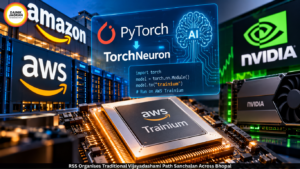
Amazon’s strategy is to make switching to Trainium easier. TorchNeuron integrates Trainium with standard PyTorch workflows, including model execution, compilation and distributed computing. This matters because hardware alone is not enough to attract AI developers. Teams also need compatible software, reliable tools and manageable migration costs.
Why This Is Important For The AI Industry:
– More competition: Amazon is working to reduce dependence on Nvidia’s AI computing ecosystem.
– Potential cost savings: Easier migration could make Trainium attractive for some training and inference workloads, although actual savings depend on the model and deployment.
– More choice for developers: Teams can evaluate alternative hardware without rebuilding their entire software stack.
– Cloud competition: The move strengthens Amazon’s efforts to differentiate AWS through its own AI infrastructure.
DawentsIT Takeaway: The launch is significant, but it does not mean Nvidia has lost its competitive advantage. Performance, software maturity, availability and real-world costs will determine whether developers adopt the alternative at scale.
In Other News:
2. Apple Teases New Mac, Launches For October 28:
Apple has teased a product announcement for October 28, 2026, prompting expectations of updated MacBook Pro models and other refreshed devices. Reports suggest the lineup could include M6-powered Macs and an OLED touchscreen MacBook Pro, although those specifications and products remain unconfirmed until Apple announces them.
An OLED display could deliver deeper blacks, improved contrast and a more premium viewing experience. If Apple introduces touch input to the MacBook Pro, it would also represent a notable change in how users interact with its professional laptops.
A new chip generation could bring improvements in processing speed, graphics and AI workloads. These upgrades would matter particularly to software developers, video editors, designers and professionals who use demanding applications.
DawentsIT Takeaway: Official specifications, pricing, release dates and whether touchscreen functionality actually arrives. Until then, treat the OLED touchscreen as a reported possibility rather than a confirmed feature.
3. AI Coding Tool OpenCode Reports A Security Incident Involving API Keys:
The OpenCode AI coding project has notified some users that API keys stored in its system may have been exposed. Users reported unexpected charges from AI service providers and, in some cases, suspended cloud projects.
What Users Need To Know: OpenCode is an AI-powered coding assistant that helps developers understand code, build features and fix bugs. Users can connect it to external AI providers, meaning compromised credentials may expose accounts beyond the coding tool itself.

According to BleepingComputer’s reporting, the incident affected approximately 1.4% of OpenCode Console users. Some users reported more than $1,700 in unauthorised charges. The full impact and circumstances of the incident remain subject to investigation.
Recommended Precautions:
If you use OpenCode or another AI developer tool:
– Check your account for security notifications and unusual usage.
– Revoke potentially exposed API keys and create replacements.
– Review provider dashboards for unexpected spending.
– Set usage limits and billing alerts wherever available.
– Avoid storing long-lived credentials in locations that are not adequately protected.
DawentsIT Takeaway: AI coding assistants can have access to powerful developer tools and paid services. A security incident involving one integration can therefore lead to financial losses or wider exposure across connected accounts.
4. US Orders Federal Agencies To Remove DeepSeek AI:
The US Department of Homeland Security has ordered federal civilian agencies to remove DeepSeek software and related services from their systems, citing national-security concerns. The order also restricts future procurement of the company’s products. China has criticised the action, arguing that Washington is politicising technology.
DeepSeek has attracted international attention for its AI models and its approach to making AI technology widely accessible. The dispute highlights a growing divide between the availability of AI tools and the security requirements imposed on government systems. The central concerns involve the handling of sensitive information, where data is processed and whether foreign authorities could potentially gain access to it. The US government’s allegations should be distinguished from independently established findings.
DawentsIT Takeaway: For businesses, the development reinforces the need to evaluate AI providers before allowing employees to upload confidential documents, customer information or proprietary code.
Government agencies and contractors may need to replace affected tools, review their AI policies and reassess their suppliers. The wider dispute could also influence international AI competition, technology procurement and cross-border data governance.
5. Australia Prepares Legal Action Against Major Social Media Platforms:
Australia is preparing legal action against five major social media platforms over alleged failures to comply with its ban on users under 16. The platforms identified in reporting are Facebook and Instagram, owned by Meta, TikTok, Snapchat and YouTube.
What is happening?: Australia’s rules require platforms to take reasonable steps to prevent under-16s from holding social media accounts. The country’s online safety regulator has been investigating whether the companies have adequately enforced the restrictions.
Reports say the regulator is gathering evidence for potential proceedings in the Federal Court. The alleged violations have not been finally determined by a court.
DawentsIT Takeaway: The dispute puts age verification and platform accountability at the centre of the technology industry’s relationship with governments.
Platforms must find ways to identify underage users while avoiding excessive collection of identity documents or other sensitive personal information. Weak enforcement could invite penalties, while intrusive verification systems could raise privacy concerns.
For parents and younger users, the case could influence how accounts are created, how ages are checked and which services remain accessible.
The Broader Perspective: Governments are increasingly moving beyond voluntary safety policies and demanding that technology companies demonstrate measurable compliance with child protection rules.
Odds And Ends:
6. Microsoft Warns That AI Agents Can Become Insider-Security Risks:
Microsoft has warned that AI agents must be treated as potential insider threats because they can interact with company systems, access information and carry out tasks. TechCrunch reported the company’s concerns about trusting advanced AI models without adequate safeguards. AI agents introduce a new challenge for corporate security teams.
AI agents are evolving beyond chatbots that simply answer questions. Depending on their permissions, they can interact with files, use business applications, execute workflows and access connected services.

That creates a different security problem; an agent may have legitimate access to sensitive systems but still make a mistake, follow malicious instructions embedded in content, or take an unintended action.
Businesses should consider:
– Giving agents only the permissions required for their jobs.
– Requiring approval before sensitive or irreversible actions.
– Keeping detailed logs of agent activity.
– Separating access to confidential data from general-purpose tasks.
– Testing agents against prompt injection and other manipulation techniques.
DawentsIT Takeaway: Companies need to secure AI agents as operational users of their systems, not simply as conversational software.
7. Town Raises $108 million To Expand Its AI Work Assistants:
An AI assistant startup reaches a $1 billion valuation. Town, a startup developing AI agents for workplace tasks, reportedly raised $108 million in Series B funding at a $1 billion valuation. The funding followed a $55 million Series A, bringing its reported total funding to $160 million.
Town’s AI assistants, called “Townies,” are designed to help employees complete work through connected tools and integrations. The company’s next challenge is to make those assistants useful across more everyday business applications.
The larger opportunity is to move AI from answering questions to completing multi-step work, such as coordinating information, assisting with administrative processes and helping employees navigate software.
However, a large valuation does not guarantee that the company will achieve long-term commercial success. Its future will depend on how reliably its agents perform, whether businesses continue paying for them and how well it handles security and data privacy.
DawentsIT Takeaway: The investment demonstrates continued interest in AI automation, particularly products that promise to reduce repetitive office work rather than simply generate text.
8. NVIDIA’s AI Infrastructure Event Puts Enterprise Computing In Focus:
NVIDIA’s GTC Berlin event is scheduled for October 20–22, with CEO Jensen Huang’s keynote expected on October 21. The event focuses on accelerated computing, AI infrastructure and enterprise deployment.
For businesses, the central question is how to move AI from experiments into dependable, large-scale production systems.
Areas worth watching include AI accelerators, inference efficiency, enterprise AI software, robotics and the infrastructure needed to run advanced models.
The event also arrives as competitors such as Amazon push their own AI chips and software ecosystems. That makes it particularly relevant to the question of whether the AI computing market will remain dominated by one hardware and software ecosystem or become more competitive.
DawentsIT Takeaway: Specific announcements should be verified against NVIDIA’s official releases as the event unfolds.
9. Norway Advances Plans To Restrict Social Media For Children Under 16:
Norway names platforms that could fall under a proposed age restriction. Norway says its planned legislation to restrict social media access for children under 16 could cover TikTok, Snapchat and Roblox, among other services. The government intends to introduce the legislation to parliament by the end of 2026.
The proposal follows growing international concern about children’s exposure to harmful content, addictive design features, unwanted contact and inappropriate advertising.
Under the proposed approach, technology companies would have responsibilities related to age verification and preventing underage access. Messaging services and games considered harmless could be treated differently.

DawentsIT Takeaway: The plan is not yet a fully enacted ban, so its final scope and implementation requirements may change.
Combined with Australia’s legal action against social media companies, Norway’s proposal points to a growing regulatory trend that could affect how global platforms design their services and verify users’ ages.
For DawentsIT Readers: The most important message is that the future of technology will not be determined by AI capabilities alone. It will also depend on affordability, trust, cybersecurity, and the ability to turn innovation into useful products and sustainable businesses.
For Summaries Or Deep-Dives On Any Tech Trends, Contact Us At DawentsIT Or Visit Www.Dawentsit.Com. Subscribe To DawentsIT For More Tech News And Videos. Stay Inspired, And We Deliver! Read more on http://www.dawentsit.com/blog-2/ #Technology #DawentsIT #TechnologyNews #Tech #Amazon #Nvidia #AI #Apple #OpenCode #DailyDoseOfTech #AllThingsTechnologyNews #WeInspireToDeliver


