

The race to build the next generation of AI hardware is accelerating, and OpenAI appears to be positioning itself as a serious contender. While the company has yet to officially announce AI smart glasses, a series of strategic hires, hardware investments, and industry reports suggest that wearable AI could become a major part of its future.
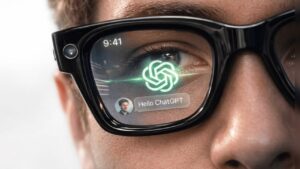
The strongest signal came this week when OpenAI reportedly hired Paul Meade, one of Apple’s senior hardware executives who helped lead engineering efforts for Apple Vision Pro and Apple’s long-rumored smart glasses project. His move adds to OpenAI’s growing hardware expertise and hints that the company is assembling the talent needed to build consumer AI devices beyond ChatGPT.
OpenAI has already partnered with legendary former Apple designer Jony Ive to create a new family of AI-powered devices. Although the company’s first product is widely expected to be a screen-free AI companion rather than glasses, previous reports indicate OpenAI is exploring several hardware categories, including smart speakers, wearable AI devices, and eventually AI smart glasses.

The Timing:
Meta has already established itself as the market leader in AI eyewear with its latest smart glasses, while Google is preparing its own Gemini-powered glasses, and Apple continues developing wearable AI technologies. The next major AI platform may no longer live inside smartphones but it may sit directly on your face.
OpenAI has been steadily building the pieces required to compete. Beyond expanding its hardware team, the company is investing in custom AI chips, developing more efficient AI infrastructure, and shifting toward AI systems capable of understanding the real world through vision, audio, and context. These technologies are essential for creating practical smart glasses that can recognise objects, translate languages, answer questions about your surroundings, and assist users hands-free throughout the day.
If OpenAI eventually launches AI glasses, they would likely rely heavily on ChatGPT’s multimodal capabilities, allowing users to interact naturally through voice while receiving real-time assistance based on what the glasses see. Instead of replacing smartphones immediately, they could serve as an always-available AI companion that understands both conversation and the physical world.

Nothing has been officially confirmed, and OpenAI has not announced an AI smart glasses product. However, the company’s recent hiring decisions, partnership with Jony Ive, and broader hardware ambitions suggest it is quietly laying the groundwork for a future where ChatGPT isn’t just an app but it becomes something you wear.
For Summaries Or Deep-Dives On Any Tech Trends, Contact Us At DawentsIT Or Visit Www.Dawentsit.Com. Subscribe To DawentsIT For More Tech News And Videos. Stay Inspired, And We Deliver! Read more on http://www.dawentsit.com/blog-2/ #Technology #DawentsIT #TechnologyNews #Tech #OpenAI #ChatGPT #SmartGlasses #AI #PaulMeade #AllThingsTechnologyNews #TechNewsUpdate #WeInspireToDeliver


